Atlantic Canada has a rich Acadian and francophone presence. In Nova Scotia, communities such as Clare, Argyle, Chéticamp and Isle Madame have deep French-speaking roots, and francophone and Acadian communities are found across the region, including Prince Edward Island and Newfoundland and Labrador. New Brunswick has a particularly strong place in this picture: the Canadian Charter of Rights and Freedoms confirmed it as Canada's only officially bilingual province.
For a business owner, this raises a practical question. Should your brand, signage and website speak English only, or English and French? There is no single right answer, and the legal requirements for private businesses depend on the province, the sector and the kind of business. This guide is a general look at how to think about it, from a brand and communications point of view, and not legal advice.
Start with who you serve
The most useful question is not "Do I have to?" but "Who are my customers, and what language would make them feel welcome?" If you operate in or near a francophone community, serve tourists from French-speaking parts of Canada, supply organizations that work in French, or want to grow into those groups, offering French can be a real advantage. If your customers are overwhelmingly English-speaking and you have no plans to reach French-speaking audiences, English only may serve you well for now.
Look at your own data. Which languages do your enquiries arrive in? Do customers ask whether you serve people in French? Do you have staff who speak French? The answers tell you more than any general rule.
Know the rules that may apply to you
Language requirements vary. The federal Official Languages Act applies to federal institutions rather than to private businesses in general, and the Government of Nova Scotia's French-language Services Act applies to provincial government bodies. Some businesses face additional rules depending on where they operate or who they work with, for example if they deliver services on behalf of government or operate under federal regulation. Rules for businesses in Quebec are different again and are outside the scope of this post.
If you are unsure whether a requirement applies to you, check with the relevant province's official languages office or ask a lawyer. Government pages in Nova Scotia speak of "active offer", which means inviting people to use English or French rather than waiting for them to ask. Even where not required, the idea is a useful model for any business that wants to welcome both communities.
Decide how bilingual you want to be
Bilingual branding is not all or nothing. You can choose the level that matches your capacity:
- Light touch: a bilingual greeting on signage, a French phone message and a short French summary page on your website.
- Core materials in both languages: your business name or tagline, signage, key printed materials and the main pages of your website offered in English and French.
- Fully bilingual: website, social media, customer service and marketing all available in both languages, with staff who can serve customers in either.
A half-finished bilingual presence can be worse than none, because it raises expectations that you may not be able to meet. If you offer a French page, make sure someone can answer a French phone call or email.
Choose your brand name and tagline carefully
If you plan to work in two languages, check that your name works in both. Words can have unintended meanings, awkward sounds or no meaning at all in the other language. Decide whether your name stays the same in both languages, which is common and keeps things simple, or whether you want a translated version of the tagline or descriptor. Our guide to naming your business in Nova Scotia covers more on choosing a name that holds up.
Design with two languages in mind
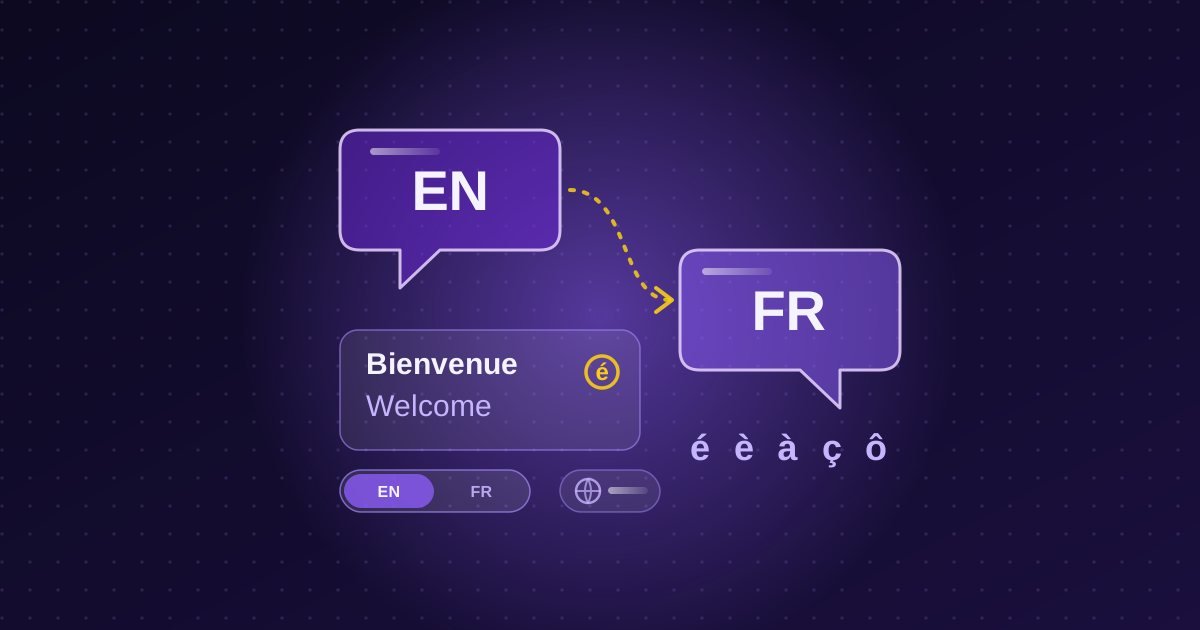
French text is often longer than English, and it uses accented characters such as é, è, à, ç and ô. Plan for both:
- Layouts that flex. Buttons, menus and headings need room to grow. A button that fits "Contact us" may not fit "Communiquez avec nous".
- Fonts that support accents. Confirm that your chosen typeface includes the full range of French characters and that capitals keep their accents. See our guide to choosing brand colours and fonts.
- Consistent treatment on signage and print. Decide the order of the languages and keep the text equal in prominence if you want both communities to feel equally welcome. See our tips on business cards and print design.
- A brand voice in both languages. The tone you use in English should have an equivalent in French, rather than a stiff literal translation. Our guide to brand voice and tone helps you define it.
Get the translation right
Good translation is not word-for-word substitution. Automated translation can be a useful starting point for your own understanding, but it often produces text that sounds unnatural or contains errors, which can undermine the very trust you are trying to build. For anything customers will read, use a professional translator or a fluent writer who understands your industry. Have a second fluent reader review the final text, and ideally someone from the community you are speaking to. Acadian French and the French used elsewhere in Canada have their own expressions and tone, so choose someone who understands your audience.
Set up your website properly
If you offer a bilingual website, give each language its own page addresses rather than switching text on the same page. Add a visible language switcher on every page, label each page's language in its code and link each page to its equivalent in the other language. Search engines recommend this so that each person sees the version suited to them. Do not rely on automatic redirects based on a visitor's location, since people should be able to choose.
Update your Google Business Profile and social media with the languages you actually serve, and be consistent. If you use the language switcher, make sure forms, confirmation messages and error messages are translated too. Our accessibility guide also covers why marking the language of a page matters for screen readers.
Keep both versions current
The biggest long-term risk is that one version falls behind. Plan from the start who will translate updates, how long it will take and how you will keep hours, prices and promotions in sync. A simple maintenance routine helps, and our website maintenance checklist can be adapted to include both languages.
A practical way to start
- Identify the communities you want to welcome.
- Check whether any language rules apply to your business.
- Choose a level of bilingual service you can sustain.
- Check that your name and tagline work in both languages.
- Plan layouts and fonts that handle French text.
- Use professional translation and a second reader.
- Set up a clear process for keeping both versions current.
If you are thinking about extending your brand or website into French and want to talk through the options, you are welcome to get in touch for a free conversation.